Since I first visited Japan ten years ago, it has had some sort of spiritual pull on me that keeps calling me back for deeper experiences. In 2019 it was the sacred pilgrimage of Kumano Kodo. As I was sharing this experience with a Japanese colleague at a conference in Portugal last year, she mentioned I should do this thing called Yamabushi training in the sacred mountains of Dewa Sanzan, in the north of Japan. As she described the mountains and her basic understanding of what Yamabushi training was, I knew immediately that I was going to do it.
Seven months later I arrived in Tsuruoka, in Yamagata Prefecture, after spending a week exploring Japan with my girlfriend Ananda, from Tokyo to Takayama and Kanazawa. Three trains and a full day’s journey got us to Tsuruoka just in time to prepare for the retreat. There was not a lot to prepare. Yamabushi training is a long-standing tradition in Japan, protected by silence and secrecy. Not much can be shared with participants about what to expect from the training. Our only task was to familiarize ourselves with a few prayers, including the long, complicated Buddhist Heart Sutra in Japanese. As Ananda was putting her energy into practicing the sutras, I decided to familiarize myself softly with them and be open to whatever happened.
Taka picked us up at Tsuruoka train station on a Monday morning and drove us straight to Zenpoji Temple, a Zen temple of the Soto school with a history dating back to the tenth century. We were already familiar with the region around Tsuruoka. We had spent the last two days as guests of the generous Shoji family, owners of Tsukasaya Ryokan in the Yutagawa Onsen on the outskirts of Tsuruoka. When I requested the reservation, mentioning that we would undergo Yamabushi training and asking them to hold our luggage during the training until we came back for our last night at their hotel, they were so happy to hear of foreigners wanting to dive that deep into their culture that they opened the ryokan before the season just to receive us. Yamabushi are revered in the region, and every local to whom we mentioned that we would go through the training gave us a surprised look and said it was going to be very difficult.
At the station, we were only four students in total who would undergo Yamabushi training, in a special program built to receive foreigners with support in English. Coincidentally, the only other foreigner was another Brazilian, and our fourth colleague was a woman from Japan with Yamabushi experience. We were briefed not to engage in conversation among ourselves, so as not to bring the labels and personas of regular social life into the training. Our guide for the preparation of the training, Taka, gave us a warm introduction to Zenpoji Temple, where we would stay for the first night. It felt like an incredible privilege to be able to spend a night as guests of the monks in this wonderful historical building and to participate in some of their routine practices.
Zenpoji is the temple of the water dragon, and the story of its foundation is based on a spiritual encounter of its founder with the dragon spirit when he prayed by a lake during a volcano eruption to calm the mountain. Two dragons representing the spirits of rivers and oceans showed up in human form to attend his prayers, and the shrine on the back of the temple houses the dragon spirits.
We were guided by one of the monks to our first practice of the day: Zen eating, over lunch. He showed us how every meal in the temple is an important ritual, where a box called Oryoki —literally meaning “vessel that contains just enough”—holds four small containers and bowls with delicious vegetarian food, always including rice and miso soup as the basis of the meal, with seasonal vegetables and pickles on the side. Meals are taken in silence, with each mouthful of food slowly chewed to liquid. No multitasking is allowed, so you first grab the food container, then the chopsticks, then direct food to your mouth, then put down the utensils, and then chew. The full meal ritual takes a full hour of eating the same amount that I would normally wolf down in five minutes as a starter. After all the food is gone from the plate but one pickle, you use this pickle with hot water to clean all the remaining food from the set, so nothing is left without being eaten. Before starting, four prayers are made to acknowledge all the work done by nature and humans to produce that food, followed by a reflection on one’s own attitude and gratitude for this day and the health of all beings.
From Zen eating we moved to the second practice of the day, chanting, especially focused on the heart sutra that they chant in ceremonies four times a day. The final practice was a Zazen session in their meditation hall. Off-limits to regular visitors, this is the room where apprentice monks eat, sleep and meditate, spending most of their days while living in the temple. Stepping into the historical hall, made of dark black wood, with blue cushions and the smell of incense, felt like walking into a world that had seen little change over the centuries. Zazen meditation is a challenge that starts with the lotus posture, from which we foreigners were spared, being allowed to meditate cross-legged, which is enough of a challenge for me, used to my meditations in a comfy chair back home. We took part in their evening practice before bed and, the next day, in their early-morning meditation before attending their main prayer ceremony.
My new Brazilian friend was already complaining about the small portions of food we were eating and asking Taka about stopping at a convenience store to stock up on protein bars for the week. I was used to fasting, and the reduced portions felt like a refresher from all the great food we had been eating the past week. There was also plenty of green tea available everywhere we went in the temple, so for me it felt like a relaxing retreat. Little did I know what was waiting for me in the following days. We left Zenpoji in the morning after the last session of Zen eating, over breakfast, and made our way to the town of Touge at the base of sacred Mount Haguro, where pilgrim lodges hosting Yamabushi practitioners and regular pilgrims are located. Before leaving, I picked up an omikuji—a fortune slip that one draws at random from a box at the temple. Mine carried an enigmatic message about not giving up before I had really started something.
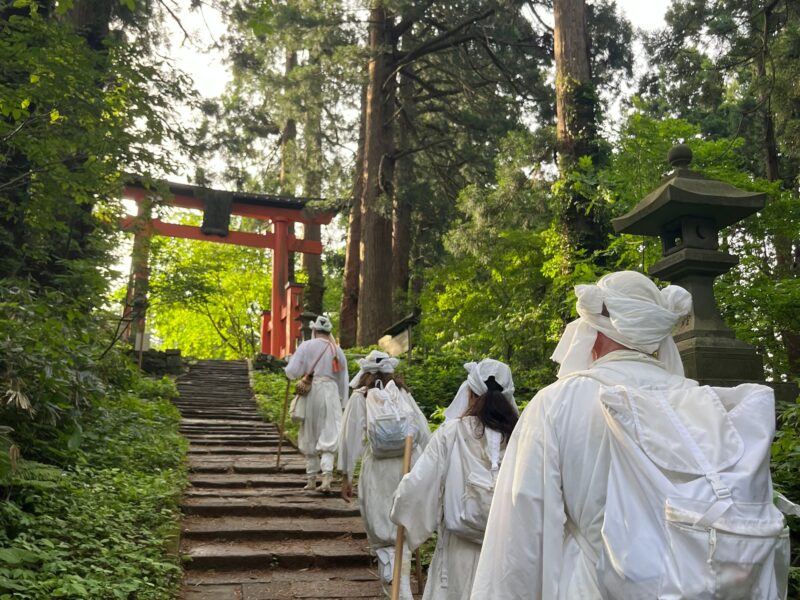
We were left at the huge red torii gate by the highway, which marked the access to Mount Haguro, so we could walk through it toward our lodge like real pilgrims. On our way, we passed a group of elderly ladies meticulously packing boxes with the day’s fresh cherry harvest. They greeted us and invited us to their space to try some cherries. They were perfectly red and sweet—the last sweet taste I would have for the rest of the week.
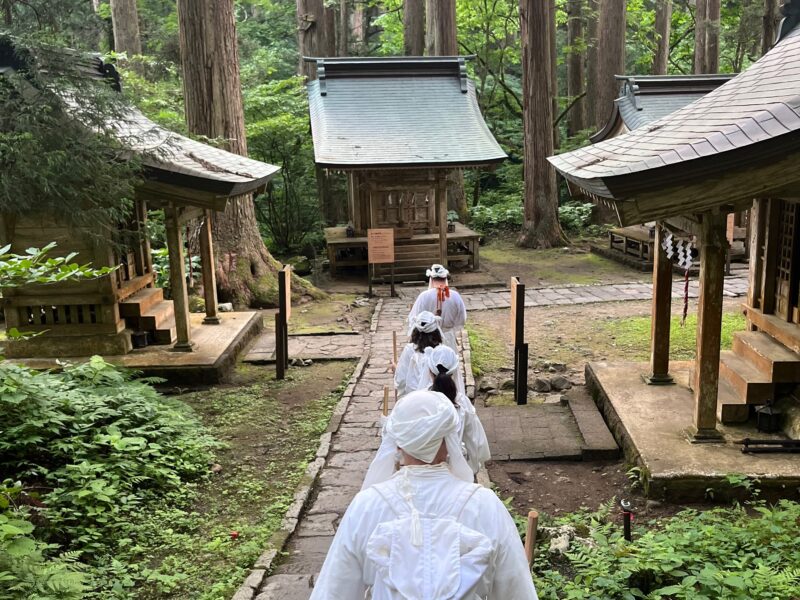
As we met up with Rick, a US-born Yamabushi who had been living in Japan for over ten years, we received the instructions for the retreat and our gear. The instructions were simple but brutal. No washing your face, brushing your teeth or showering during the three days of training, no snacks, no reading or writing. Once the master walked in, no more speaking was allowed besides the word “Uketamo,” which means “I fully accept everything that is required of me.” We were supposed to say Uketamo to every command of the master Yamabushi. We also received our Shiroshozoku, translated as “the clothing of the dead.” It’s a complicated white uniform of many layers that you must learn to put on and tie around your body. For me, it was as hard as origami. For a kid who never really learned how to tie his shoelaces, this was going to be a massive challenge. We were also given a white backpack to carry only water and rain gear, as well as our split-toe white shoes called jika- tabi. When a box with different sizes was presented, traumatized by the Japanese slippers I had worn at ryokans that never fit my feet, I went for the largest size. Our new Japanese colleague and the guide said it was probably too big for me, but in my usual stubborn reaction of getting on with things without getting caught up in details, I insisted they were fine.
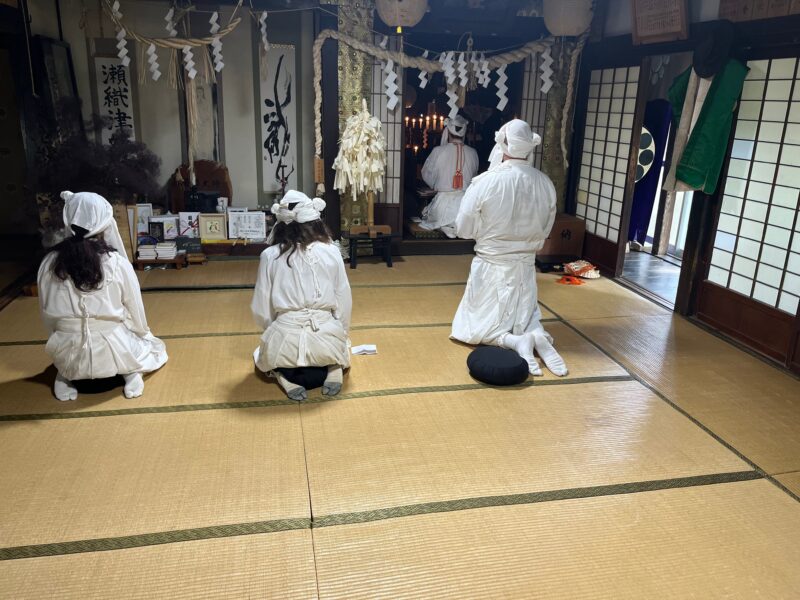
The master stormed into the room and gave instructions in Japanese. Rick guided us with translations as we followed along with prayers, chanting our mantras to purify ourselves before entering the mountain. The pace of everything was guided by the sound of the Horagai, the Yamabushi musical instrument made out of giant seashells, which called the group to be ready for the next order, to be answered with a cry of “Uketamo.” Our phones and all electronics were taken away and stored in a box. We would not know the time or any details of the program. We were supposed to be always near and ready to respond to the sound of the Horagai, and to our orders with Uketamo.
We were finally ready to go up the mountain. Apparently, no lunch was on the schedule for that day. As we followed the master, marching fast, a single column of Yamabushi students entered the national park of Mount Haguro, drawing the attention of the local tourists.
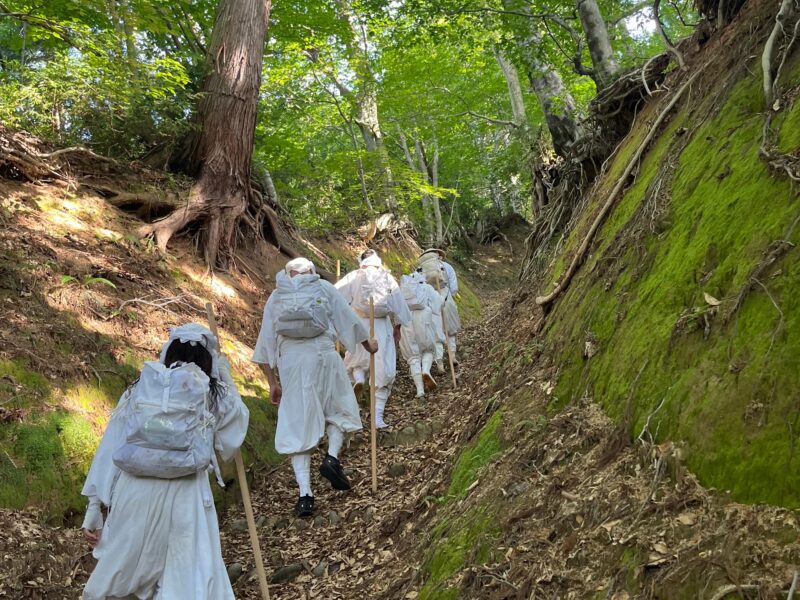
The master would stop at shrines, where we followed along in endless chanting of prayers, and then marched quickly up the trail again, deeper into the park. At this point, I started to ask myself what the hell I had gotten myself into this time. The most disturbing thought was how on earth I was going to climb the mountain in this elaborate white outfit, already soaked with sweat, and go three days without showering. On top of that, the pace of the march was way faster than I would have liked. The story that started playing in my head was that I was dishonoring this incredibly beautiful forest by just marching through it, with no stop for contemplation or stillness—only prayers that meant little to me, in front of shrines that seemed empty of icons. To make things worse, as we started going up the mountain, my shoes refused to stay on my feet. It was like sprinting up a steep mountain trail in beach sandals, and I could already feel the pain in my right knee from the lack of solid footing on the ground. A painful lesson in not taking care of my own needs and just settling for whatever was in front of me.
The master took us up and down Mount Haguro relentlessly, making very quick water stops on the way, where I hardly managed to amend the knots of my uniform, which had started to fall off. At this point, it was clear to me that my inner-work journey had just gone too far this time. There was no positive thinking I could draw on to keep my mind from hating this experience with all its might. I wanted to smack the master with my stick, throw my Yamabushi shoes and uniform in the river, and continue on my own, naked, if I had to. I was hating every minute of this.
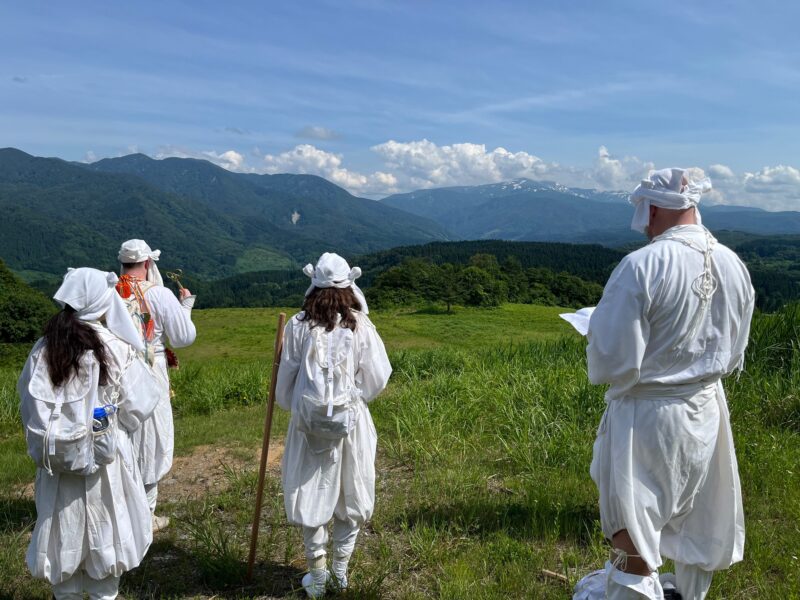
Things did not get any better when we finally arrived at the pilgrim lodge after what felt like a solid four hours of hiking up and down the mountain, fighting with my shoes. All I wanted was to get out of that uniform, and this is exactly what I did the minute I arrived home—only for Rick to demand I put it on again before the next horn called us for meditation. If Zazen was not difficult enough, now I was facing an extreme version of it, soaked in my own sweat, in an uncomfortable white uniform whose garments covered me from head to toe. My mind was not having any more of this. It refused to go into meditation. It bombarded me with self- judgment for putting myself into this situation. I could not get my mind to stop obsessing over what would be next. And next came a night walk.
No idea how long it would take, no idea where to. Pieces of my uniform fell along the way as I tried my best to keep up with the pace and not lose any of them in the march. When we finally got home, the master announced it was time for our evening meal. We pulled out two wooden boards and sat around them with our bowls and chopsticks. Everyone was allowed a bowl of rice, a bowl of miso soup and two pickles. Someone also needed to have the master’s food ready on the table before he stormed in. As he did, he screamed something in Japanese that sounded like “Sando, Sando,” and shoved all his food into his mouth in less than ten seconds. We were supposed to do the same and follow him. At this moment, remembering the beautiful experience of the night before at the Zen temple, I felt like breaking down in tears. What kind of monster is this master, who does not even honor his food? my inner judge screamed from deep inside my mind. After our terrible feeding experience, it was time for more long prayers, until eventually we were allowed to take off our uniforms and sleep. The instructions were clear. Wake up at the first sound of the Horagai and go to the toilet; at the second horn, put on your uniform; and at the third, be ready outside, behind the master.
I was exhausted, dealing with bruises from misusing my uniform and from the excessive exercise. I lay down on my futon in the same space where we had prayed and eaten that day, and had disturbing dreams. At some point, I woke up in the middle of the night, thinking I had heard the sound of the Horagai. In a rebellious attempt to keep some dignity, I sneaked into the bathroom with a toothbrush and brushed my teeth. At that point, it dawned on me what the experience of my ancestors would have been like. A full lineage of men having to follow orders on various battlefields, for generations and generations of military service. Was this the core wound that made it so hard for me to follow orders and deal with authority figures?
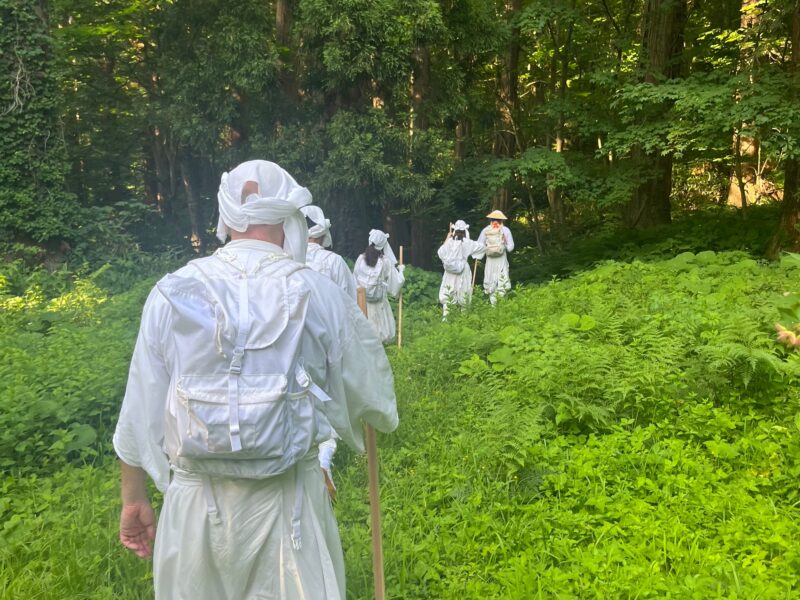
The next morning started miserably, but now, as a second rebellious act, I exchanged the traditional Yamabushi shoes for my own black trail sneakers. If our Mr. Miyagi wants me to climb hills all day, I will do it in proper shoes. The morning started differently for me. I was starting to embrace Uketamo, to be fine with the state of misery I was in, and to tune in more to the beauty of the forest and the morning mountain mist. I felt immense gratitude to my shoes, and to Ananda for being there with me, still in high spirits. The master had selected her to scream “Otachi,” meaning “we move,” every time he gave the order to move. It was beautiful to see how she was going through this experience with strength, even though I was forbidden to help her with anything and we could not even talk to each other. The reality is that, on that first day, I probably needed her help more than she needed mine.
The first order of the day was a new one: a waterfall meditation. We had to strip off our uniforms and chant the heart sutra under a freezing-cold waterfall. Just having water come down my sweaty body felt great, and I enjoyed an experience that, for others, felt like torture. The Yamabushi training is layer upon layer of physical and mental challenges, but it’s interesting to watch how each participant struggles with the parts of the training that trigger them.
I could see my new Brazilian friend was starting to break. His eyes looked helpless, and he seemed to be struggling every inch of the way. The hike that day did not make it any easier, as we went at a fast pace up two very steep hills, to the point that we needed to use ropes to climb the last portion of the trail. On the way down, we met a group of schoolchildren who were cheering us on and showing reverence. Yamabushi are highly respected by the locals, especially the elders. I was the sloppiest of the group. My uniform looked more like a cross between a Franciscan monk and a medieval beggar than a proper Yamabushi’s, as I struggled to properly tie my robe and all the garments. It was important to me to fully live the experience of the underachiever. There was no way I could overachieve at this experience. My focus was on keeping my inner judge from convincing me to quit, as I tried to ground myself in my body despite all its discomforts.
We made it down in time for a ceremony held by the local priest to bless us, and a longer break to eat the two rice cakes each of us was carrying in our packs. Ananda and I shared a loving moment, lying together, exhausted, by the temple staircase, and I was beginning to find inner peace and a glimpse of freedom in a reality where all my freedom had been taken away by the master and the rigorous training.
As we drove back to the lodge, dreading what the afternoon could bring since we were all completely exhausted, the orders were given that at the sound of the next horn we should meditate, and that in the meantime we should rest. As I lay belly-up on the tatami in my stinky uniform, I no longer felt the desperate need to take it off. As I lay there staring at the ceiling, I saw my Brazilian friend returning his gear and asking to leave the training. Apparently, something that is not unheard of. I started to fantasize about what it would be like to also say I was ready to quit. I could be under the shower and off to a beautiful dinner in Tsuruoka in no time. As my inner judge started pitching the idea inside my head, a whisper from the heart reminded me of that omikuji from the Zen temple. Do not quit before you really start this.
The call for meditation took way longer than I expected, and all I could do was lie staring at the ceiling, then sit outside and stare at the garden. In Yamabushi training, you never know when the next call will come, so there is not much you can do besides facing your boredom. As I sat outside in the late hours of the afternoon, feeling the sun come down, I was fully aware of my surroundings, in a weird liminal space where all I could do was wait and watch as the mosquitoes came to dine on my tired body, protected by the Yamabushi uniform. I could even start to feel gratitude for the uniform, as it kept most of my body protected. Most importantly, I could sit still in the total discomfort of that situation and really say “Uketamo.” My mind went quiet, so much so that the evening walk was actually quite enjoyable. It was beautiful and surreal to see that line of white figures walk through the dark forest with only the dim light of two lanterns, hearing only the soft ring of the master’s bell and the sound of the Horagai announcing that we were entering the forest and keeping the bears away.
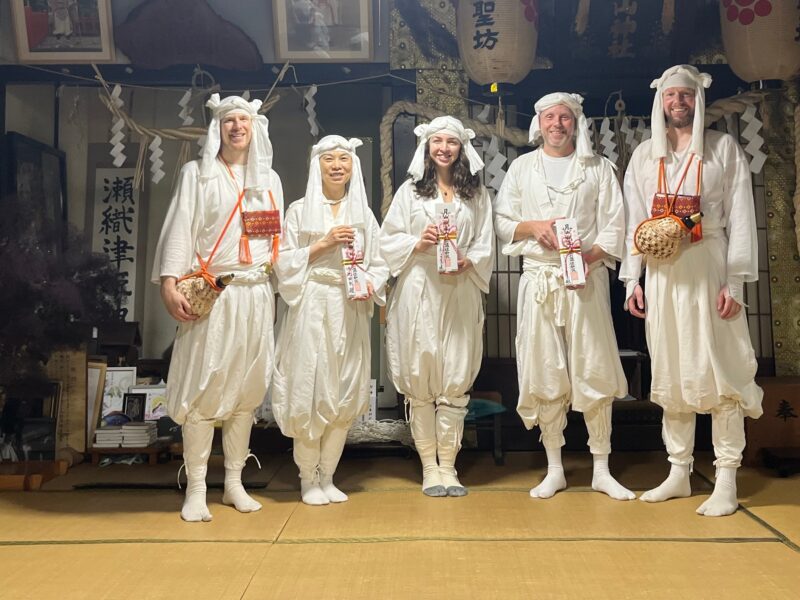
On the last day, after a pilgrimage to the top of Mount Haguro to attend morning prayer, we descended to conclude our training. I can’t say the last day was bliss. I somehow put my Yamabushi pants on upside down and had to untie the whole uniform again, ending up the last one to line up, under pressure from the master. While living that experience of totally surrendering one of the most important values I carry in my life—Freedom—I realized how easily I give it away in my daily life in exchange for validation: overcommitting myself to help people, in life and work, where I feel I can add value and have a chance to feel important, to the point that many of my days are not that different from Yamabushi training. Yes, I don’t have to wear complicated clothes and pray all day, but I can think of countless times when I had to hurry through my morning to attend a call with someone to whom I had offered an hour of my day without a strong reason. Many workdays look like a complicated show, even more complex than putting on the Shiroshozoku and chanting the heart sutra. Most of it is not really aligned with what is truly important to me and my own mission in this life, but is instead about serving the urgency of other people’s projects and agendas for some token of validation. If life is so precious and the short time we have on this planet is all we have, why do I give it away so freely? What makes me say so many yeses and so few nos? Is it really all worth it, to the point that I’m rushing through the day with no time to contemplate the beauty of life around me, or the people I love?
How different it is to say yes to life rather than yes to everyone who seems to appreciate something you can give them. What would it take for me to become my own Yamabushi master and lead my own pilgrimage through this life?
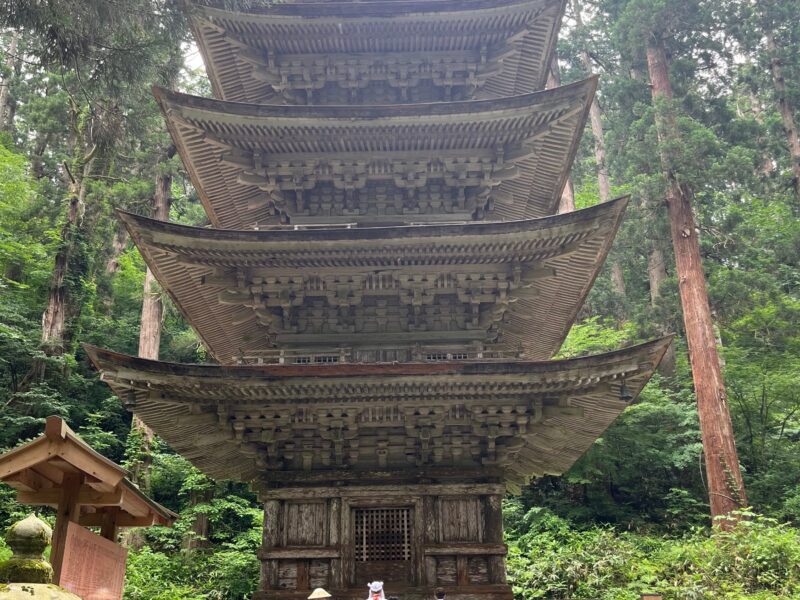
As we spent our last day of integration on a much more gentle walk guided by a senior Yamabushi master, with lots of time for stillness in nature, I felt immense gratitude for my life, for the freedom of finding my own path, and for my Japanese spirit guide who keeps calling me to this beautiful country to learn the hard lessons for a life truly well lived on this planet. I will never forget the beautiful sound of the Horagai, reminding me to cherish that moment in time, and the space to truly open my heart and not live a life of endless running to the next thing. The moment I truly embraced Uketamo and its meaning: I humbly accept, with an open heart.
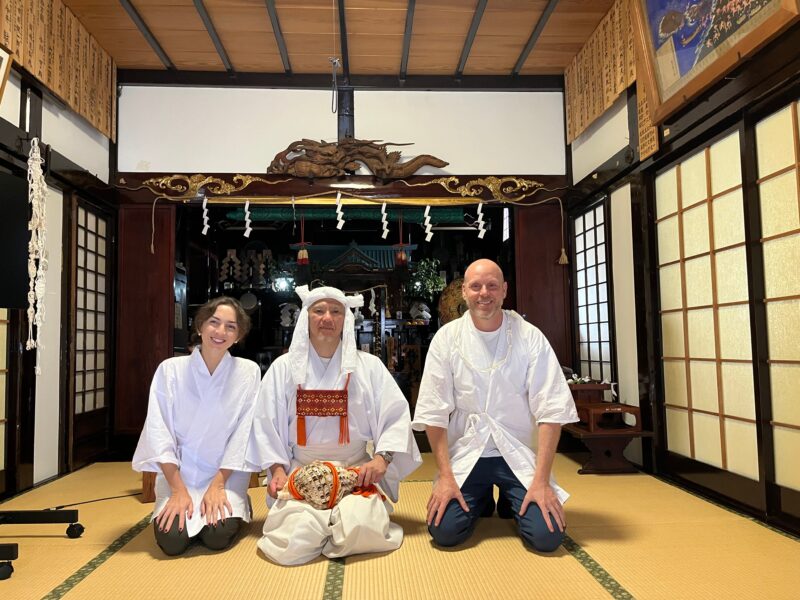
To learn more about joining an Yamabushi training check out the link below.
www.yamabushido.jp